Showing posts with label DET地方実施. Show all posts

Wednesday, 5 March 2014

ウルゲンチ市DET

2月28日、ウズベキスタン障害者協会ホラズム州支部でムハバットさんがDETをしました。トレーニングはホラズム州の州都ウルゲンチ市にあるリハビリセンターで行われました。

DETを実施する前日、大野さんがウルゲンチ市にある96番寄宿学校(ろう者特別支援学校)に行き、盲ろう者調査票を使って視力の問題があるろう者の学生から聞き取りを行いました。事前の電話では、学長は視力が悪い学生は3-4人です、と言っていましたが、実際には視力が悪い学生の数はとても多かったです。

On February 28, Muhabbat conducted DET training at the Uzbek Society of Disabled People Khorezm regional branch. The training was held at the rehabilitation center in Urgench city, Khorezm region.

The day before conducting DET, Ohno san went to special boarding school for deaf children #96 in Urgench city; using the questionnaire on Deafblind people interviewed the students who were facing eyesight problems. Although over the phone the director of the school told me that there were only 3 or 4 students with bad eyesight; in fact, the number of students having visual problems was really big.

96番寄宿学校(ろう者特別支援学校)における聞き取り調査
During the interview at #96 special boarding school for deaf children

大野さんは13人の子供から聞き取りをしました、その子供の中には、生まれつき全く聞こえず、それに加えて日一日と目が見えづらくなくなっている子供がたくさんいました。彼らは学校で勉強しているとき、色んな問題に直面しています。例えば、先生が黒板に書いたことを見るのが難しくなっていったり、手話が遠くからだと見えなくなったり、暗くなったときに一人で歩けなくなったりします。

Ohno san interviewed around 13 children, most of them were totally deaf by birth with their eyesight getting worse day by day.They were facing various problems while they study at school; for example, it was getting difficult for them to see what was written on the blackboard, to see the sign-language from the distance, to walk alone when it gets dark, and etc.

ウズベキスタン障害者協会ホラズム州支部の会長サイダさんが、開会の挨拶で私たちを参加者に紹介しました。
The chairperson of the Uzbek Society of Disabled People Khorezm regional branch Ms. Saida Kurbanova did a welcome speech and introduced us to the participants.
いつもどおり、最初の演習:「書いてください!障害とは何ですか?」
答えをおおざっぱにまとめると、「障害は良くないことです」。
As always the first exercise was "Please write! What is Disability?" Generally speaking, the answers were "Disability is not good".
今回も、主ファシリテーターは1人だけ(ムハバットさん)。参加者の中で一番若いフォティマさんに、「障害は何ですか」について色々聞いています。
This time again the main facilitator was alone (Mukhabbat); she is asking the question of "What is Disability?" from the youngest participant - Fotima.
ムハバットさんがファシリテーションしています。
Mukhabbat is facilitating.
DETのプレゼンテーション。画面には、「障害は何ですか?」「問題はどこですか?」
During DET presentation. On the screen: "What is Disability?" "Where is the problem?"
グループワーク:ホラズム州の障害者を支援するための行動計画を作りましょう!
Let's make an action plan to support Disabled people in Khorezm region!
エナジャイザーが足りなかったため、疲れてしまった人もいました。
Because of the lack of energizers, some of the participants got tired. 
行動計画のグループ発表 
Group presentation of the action plan 
サイダさんにDETマニュアルを寄贈しました。
Ms. Saida Kurbanova received DET manuals.
JICAからの感謝状も。
And also the certificate of appreciation from JICA.

ウルゲンチ空港から市内へ向かう途中の新しい建物郡の全てに、とてもアクセシブルなスロープが設置されていて、びっくりしました。ウルゲンチ市の障害者が強いからかな、と思ったら、実は、ホレズム州障害者協会の力でした。ウズベキスタン障害者社会保障法によると、新しい建物を建てる時には、必ずスロープを作らなければなりません。サイダさんが、スロープの図面を事前に厳しくチェックしているので、アクセシブルでないスロープはあまり作られません。
しかし、ウルゲンチ空港ではたくさんの問題に直面しました。飛行機を降りるためのエレベーターがありませんでしたので、ムハバットさんは4人で抱えて乗降りしました。

We were surprised to see that newly-built buildings in the center of Urgench city - all of them had very accessible ramps at the entrance. We thought the Disabled people in Urgench were very strong. In fact, it was turned out to be the effort of Khorezm regional branch of Society of Disabled People; Ms. Saida Kurbanova is authorized to give permission to the designs of new buildings, checking if its accessible features are appropriate or not. According to the law on Social Protection of Disabled people, when building a new building, they should ensure building ramps.
However, we faced some difficulties at the Urgench Airport, because there was no passenger's lift for Disabled people to get on-off the plane; Mukhabbat was carried by 4 men to get on-off the plane!


ウルゲンチ空港通りのスロープ
Ramp of the new building at airport road


文責:ムラト
Edited by Ohno


Sunday, 2 March 2014

ヌクス市DET

2月10日にカラカルパクスタン共和国の首都ヌクス市でDETを実施しました。今回のトレーニングはウズベキスタン障害者協会のカラカルパクスタン支部で行いました。

On February 10, 2014 Disability Equality Training (DET) was conducted in Nukus city - the capital of Karakalpakstan Republic. This time the training took place at Karakalpakstan branch of the Uzbek Society of Disabled People.

DETはウズベキスタン障害者協会カラカルパクスタン支部の会長パルシャグルさんのオフィスで行いました。
DET was held in the office of the Chairperson of Karakalpak branch of the Uzbek Society of Disabled People, Ms. Parshagul Davletyarova

「障害者」と言う言葉は、カラカルパク語では「マイプ」であることを知り、とても興味深かったです。「マイプ」と言う言葉は元々「体の不自由な人」に近い意味があります、つまり障害の医学モデルに非常に近いです。

It was interesting to know that in Karakalpak language the word "Disability" is translated as "Mayi'p" - close to the meaning of "Handicapped", which draws all the attention to a individual Disabled person and particularly to his/her impairments as the only cause of his/her disability. Therefore, it is close to the medical model of disability.

これはウズベキスタンの議会「オリーマジリス」の基金からの財政援助で設立された、カラカルパク障害者協会の小さな縫製工場です。
This is a small sewing factory of the Karakalpak society of Disabled people, which was established under the financial support of Oliy Majlis public fund.
これは補助金で購入したミシンです。This is the sewing machines purchased with the grant money. 

協会の支部会長パルシャグルさんはとても活発な方で、カラカルパクスタン地方における障害者の活動を支援するために、国際機関や政府機関の財政支援による資金を調達しようと、数々のプロジェクト・プロポーザルを書いているそうです。これまでに、合計15のプロジェクト・プロポーザルが採択され、自ら実施した、と話してくれました。

The chairperson of the society, Ms. Davletyarova seemed to be very active in submitting project proposals to international organizations and government agencies to raise funds and provide financial support for Disabled people in the region. She told us that until now she has already wrote and implemented 15 projects in Karakalpakstan.

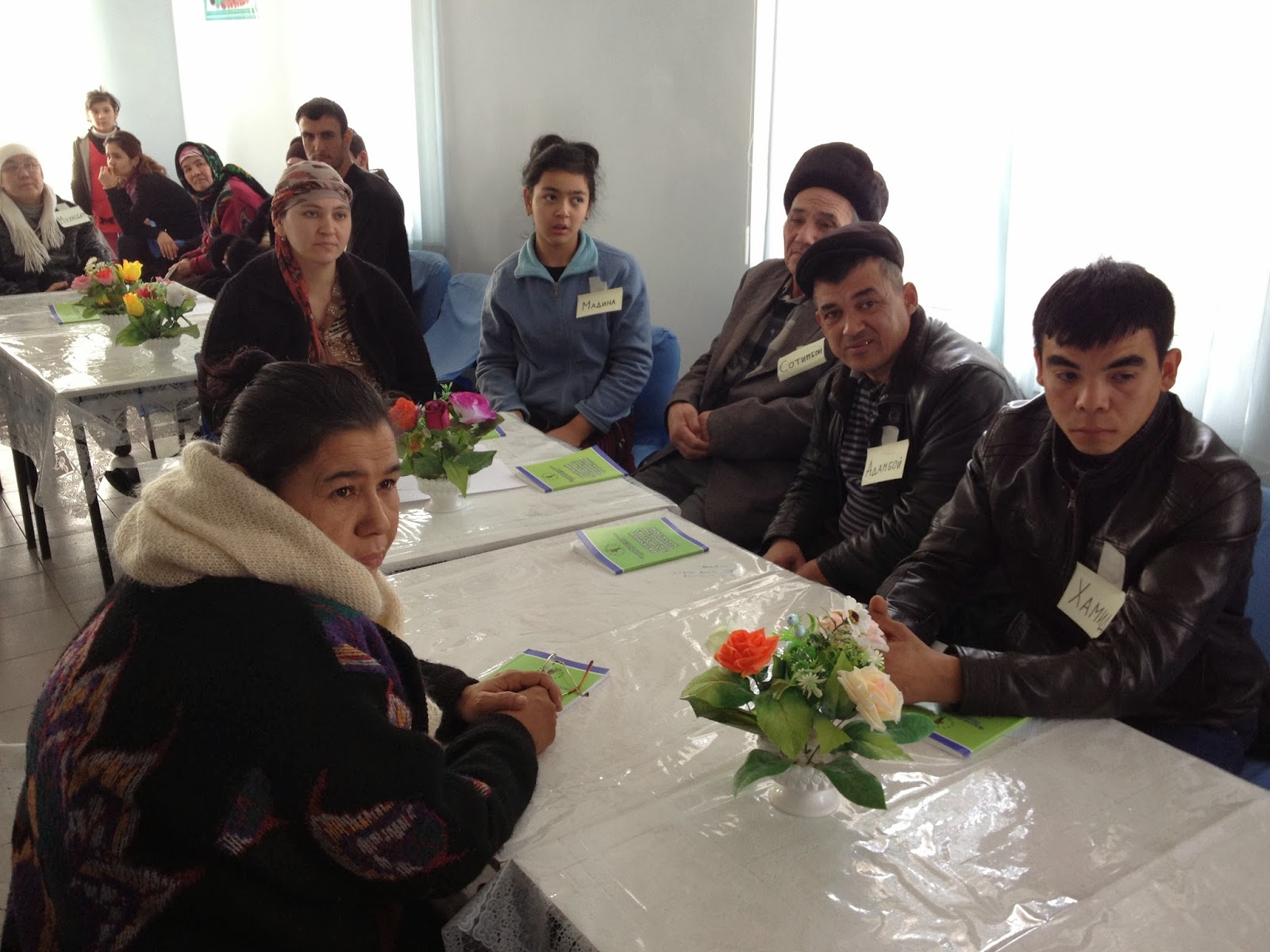
自己紹介:カラカルパク障害者協会の地区支部の会長など、合計10名がトレーニングに参加しました。
Self-introduction: overall 10 people participated in the training, including the chairpersons representing the district branches of the Society of Disabled People in Karakalpakstan.

カラカルパクスタンの中学校で情報学を教えているJOCVの蔦木さんもトレーニングに参加してくれました。

JOCV volunteer Mr. Kuria Tsutaki, who is now volunteering at a school in Karakalpakstan as a teacher of information science, also participated in the training.

今回は、主ファシーリテータ一人だけ(ナゾのキャット)。彼女は障害者協会の会長を対象としたDETをやるのは初めてでした。
The main facilitator was Nazokat without any other co-facilitators; moreover it was her first time that she did DET for the chairpersons of the Society of Disabled People.
最初の演習:「書いてください!障害とは何ですか?」
The first exercise of the training: "Write! What is Disability?"
協会の会長パルシャグルさんが、障害についての自分の意見を述べています。基本的には、彼女の説明も「障害の医学モデル」に近い感じでした。
The chairperson of the society Ms. Davletyarova is giving her opinion on what "Disability" is. Basically, her explanation was close to the medical view of disability with the focus to inability.
最も活発なボランティア、トフタシュさんは、いつでもすぐにDETトレーナの質問に答えてくれます。
The most active volunteer in Karakalpakstan Ms. Reimova Tokhtash was always ready to answer the questions given by DET trainer.
トレーニングがとても興味深かったため、参加者は休憩しないで行動計画に進みましょう、と言いました。
The training was so interesting, so that the participants wanted to proceed to action plan making without any break. 
「カラカルパクスタンで障害者を支援するためには、どのような活動が必要なのか」について、参加者の一人が発表しています。
The presentation of what kind of actions should be taken in Karakalpakstan in order to support Disabled people. 
このトレーニングの開催へ向けて調整してくれたパルシャグルさんに感謝状を贈呈しました。
We presented the certificate of appreciation to Ms. Davletyarova for organizing the training.
グループ写真
Group photo

文責:ムラト
Edited by Ohno
    

Saturday, 4 January 2014

シルダリヤDET

去年、12月26日(木)に実施したDETトレーニングについて書くのが遅くなってしまいましたが、「遅くても書かないよりまし」。実は、その日は、二つのDETが別々の場所で同時に行われました。「亀さんグループ」のサフィヤさんとムハバットさんは、魚が多いシルダリヤ州の州都グリスタン市でDETを実施、ナゾのキャットとムヤッサルさんはタシケント国立教育大学の学生にDETセッションを実施しました。

It has become late to write about DET trainings we held last year on December 26 (Thr), but "It is better late than never." In fact, that day  two DETs took place simultaneously. One part of SHG "Istiqbol": Safiya and Mukhabbat conducted DET in Gulistan city - the capital of Syrdarya Province, which is famous for fish; while Nazokat and Muyassar gave a lecture style DET session for the students of Tashkent State Pedagogical University.

グリスタン市では、「市民社会形成モニタリング独立研究所」の建物の3階の会議室でDETトレーニングを実施しました。
DET training in Gulistan city was conducted in the building of Independent Institute for Monitoring the Formation of Civil Society  3rd floor conference hall.

私は大野さん、サフィヤさん、ムハバットさんと一緒にグリスタン市に行きましたので、ナゾのキャットとムヤッサルさんが実施したDETがどうだったのか分かりません。ナゾのキャットに聞いたら「トレーニングは良かったと思います」と言う答えしかもらえませんでした。

ベコボッド市DETと同じように、グリスタン市でもトレーニング開始前に電気が切断され、ノートパソコンでプレゼンテーションを見せなくてはなりませんでした。トレーニングが終わっても電気は復帰しなかった。だから、私が撮った写真はちょっと暗いかもしれません。

As I went to Gulistan city with Ohno san, Safiya and Mukhabbat, I don't know much about the DET conducted by Nazokat and Muyassar. However, when I asked Nazokat about it, she only said "I think the training was good."
Again this time, like it was in Bekobod city before starting the training in Gulistan city the electricity was cut off, so we had to show the presentation on the notebook. Therefore, the photos I took may be a bit dark.

サフィヤさんはシルダリヤ州に住んでいる7人の障害者のためにDETトレーニングを実施しました。
Safiya conducted DET training for 7 disabled people living in Syrdarya province.
ムハバットさんは、別の部屋でシルダリヤ州内の様々な地区の障害者協会の会長のためにDETを実施しました。
In another room Mukhabbat separately conducted DET for the chairpersons of various district branches of the Uzbek Society of Disabled People in Syrdarya province.
参加者の一人、ジャムシドさんが「障害とは何ですか」という質問への答えを書いています。ジャムシドさんは自動車事故で右手を失った。
One of the participants Jamshid is writing the answer to the question "What is disability?". Jamshid has lost his hand in a car accident.
ほぼすべての参加者が、障害のことを説明する時、機能障害に目を向けていました。 私に気に入った回答は「障害は社会の中で自分を見つけることです」。
Almost all the participants had a focus on the impairments.  While the answer I liked the most was "Disability is to find yourself in society".
今回は「障害は神様からの罰である」と言う答えは一つだけでした。
There was only one answer like "Disability is a burden from God" from 1 participant.
最も積極的だった参加者、アスロルさんがベコボッドDETのトゥルキさんと同じように、星の真中を押すと箱の中に無理に入れることが出来ると言うアイデアを提案しました。
The most active participant of the training Asror, similar to Tulkin from Bekobod DET, proposed the idea of pressing the center of the star and inserting it by force into the box.
ジャムシドさんは、箱を開けて星を入れると言うアイデアを提案しました。
Jamshid proposed the idea of opening the box and then putting the star into it.
サフィヤさんが、行動計画「シルダリヤ州で私たちは何をしなければならないか?」の書き方を説明しています。
Safiya is explaining how to write the plan of action on "What should we do in Syrdarya province?"
グループ写真
Group photo

最後に、サフィヤさんが「障害に対する考え方が変わりましたか。」と質問したら、皆さんは「あまり変わっていない」と答えました。「障害者は障害者です。障害がない人は障害がない人です。この事実は変えることが出来ません!」とアスロルさんが言いました。

In the end, when Safiya asked the question if their opinions concerning disability have changed or not, all the participants said that they still stick to the answers they give at the beginning. "Disabled people - are disabled people. Non-disabled people - are non-disabled people. And nothing can be changed here!" said Asror.

大野さんがシルダリヤ州ウズベキスタン障害者協会の会長ムハラムさんにJICAからの感謝状とDETマニュアルを贈呈しています。
Ohno san is presenting the certificate of appreciation of JICA to the chairperson of Syrdarya province branch of the Uzbek Society of Disabled People - Ms. Mukharram Abduraimova.
トレーニングの後、ムハラムさんと一緒にグリスタン市にある「障害者の家」を見に行きました。
After the training with Mukharram we went to see Disabled People's Home located in Gulistan city.

ウズベキスタン障害者協会の会長によると、この障害者の家はウズベキスタンで始めてNGOによって作られた障害者居住施設だそうです。

According to the chairman of the presidium of the Uzbek Society of Disabled People, this house was the first home for disabled people created by NGO in Uzbekistan.

文責:ムラト
Edited by Ohno


Sunday, 22 December 2013

星は、本質的に美しい:ベコボッド市DET

昨日、12月21日(土)にまた風の強い街ベコボッド市でDETトレーニングが行われました。今回は、ベコボッド地区ではなくベコボッド市でDETを実施しました。ベコボッド市はベコボット地区から約20キロに位置しています、タシケント市からは160キロぐらいです。

Yesterday, on December 21 (Saturday) one more DET training was conducted in the city of strong wind - Bekobod. This time, it was not in Bekobod district, but in Bekobod city itself, where DET was held. Bekobod city is located at around 20 km away from the district, and from Tashkent city approx. 160 km.

トレーニングは、「クヨシジョン」(ウズベク語で:太陽ちゃん)と言う障害児のための11番幼稚園で開催されました。写真:サフィヤさん、幼稚園の入口で。
The training was held in a special kindergarten 'Quyoshjon' #11 for disabled children. Photo: Safiya at the entrance of the kindergarten.
「亀さんグループ」のリーダー、ムハバットさんがファシリテーター、サフィヤさんが副ファシリテーターでした。
The leader of self-help group 'Istiqbol' Mukhabbat was the main facilitator, while Safiya was the co-facilitator.

トレーニングを開始する準備をしている時に、私は大野さんに「停電がないといいですね」と言いました。しかし、私の希望はあえなく打ち砕かれました。電気はトレーニング開始前に切断され、ノートパソコンでプレゼンテーションを見せなくてはなりませんでした。

At the time when we were preparing to start the training, I told Ohno san "I hope there will be no electricity cut-offs". However, my hopes were all dead, and the electricity was suddenly cut off, so we had to show the presentation on the notebook.

15人の参加者の中には、様々な障害がある人、トレーニングに来れなかった障害者の親族や、自分は障害がないけど障害者と関係のある人が参加しました。
The 15 participants were people with various impairments, the relatives of those disabled people who couldn't come to the training, and simply non-disabled people who had some relation to the disabled people. 

ムハバットさんの最初の質問は、「すべての障害者を健常者にするべき、という考え方に同意しますか」。その質問に、すべての参加者が、障害者の方が完全に社会に参加するためには、彼らをリハビリテーションする必要がある、と回答しました。これは障害の医学モデルの観点からは正解ですね。ムハバットさんは「もちろん、リハビリテーションは必要ですが、医学的リハビリテーションは、障害の種類によって、効果がない場合もありますね」と追加しました。リハビリをしても「健常者」にすることが出来ない障害者の方は、完全に社会に参加することが出来ないと言うことなのでしょうか、と問いかけました。

The first question asked by Mukhabbat was "Should we make all disabled people normal?" To which all the participants answered that the rehabilitation is necessary to make people with disabilities normal in order for them to fully participate in society. A good answer from the perspective of the medical model of disability. However, Mukhabbat added that of course rehabilitation is needed, but there are cases that the medical rehabilitation can't be done or can be done only to some extent, depending on the type of impairment. So that means that those whom we can't make 'normal' can't fully participate in the society?

第二の質問「障害って何ですか」への参加者の回答。「障害は神様からの罰である」と言う答えが5つもありました。私が気に入ったのは、ムハマジョンさん(車いすに座っているお爺ちゃん)の回答でした「障害は私の心の悲しみ」。
The second question addressed to the participants was "What is disability?" There were answers like "Disability is a burden from God" from 5 participantsThe answer I liked the most was given by Mukhamajon (the old guy sitting in the wheelchair): "Disability is a sorrow of my heart".
「この星☆型を箱に入れることが出来ますか?」と言うゲーム。今回はサフィヤさんが星をもっと大きくしたから、参加者は間単に星を箱の中に入れることが出来ませんでした。
A game called "Can you put this star into the box?" This time Safiya made the stars bigger so that the participants couldn't easily insert the start into the box.
参加者のマフザさんが「この星☆の大きさは箱の穴より大きいため、箱に無理に入れると、星が変形する。だから、箱の穴をもっと大きくしなきゃ」と答えました。
One of the participants Makhfuza said "As the size of this star is bigger than the hole of the box, if we insert it by force into the box the star will get deformed. Therefore, it is better to make the hole bigger."
他の参加者トゥルキさんは、星の真中を押すと箱の中に無理に入れることが出来ると言うアイデアを提案しました。
Another participant Tulkin proposed the idea of pressing the center of the star and inserting it by force into the box.
「箱の穴が小さいでしょう。星を入れることは難しい、入れたら星の形が変わる!」結局、皆が彼女のアイデアに賛成しました。
"The hole of the box is small, can't you see. It is difficult to insert the star into the box, and if inserted the star will change its shape!" In the end, everybody supported her idea.
第二セッションのグループディスカッション「ベコボッド市の障害者のための行動計画」
Second session's group discussion: "Plan of action for the disabled people in Bekobod city".
ムハバットさんは、自分の携帯電話でちゃんとタイムマネジメントをしていました。
Mukhabbat did the time management with her mobile phone.
グループのリーダー、マフザさんが行動計画「障害者を支援するためにベコボッド市で何をしなければならないか?」を発表しています。プロジェクタ画面にはウズベク語で「行動!環境を変えるには、私たちには何が出来るでしょうか?」と書いてあります。
Presentation of the plan of action by the group leader Makhfuza "What should we do to support disabled people in Bekobod city?" On the screen in Uzbek: "Action! Change the conditions! What can We do?" 
大野さんがウズベキスタン障害者協会ベコボッド市支部の会長ラヒマさん(左)とベコボッド地区支部の会長サノバルさん(右)にJICAからの感謝状を贈呈しています。
Ohno san is presenting the certificates of appreciation of JICA to the chairperson of Bekobod city branch of the Uzbek Society of Disabled People - Ms. Rakhima Khamidova (left), and the chairperson of Bekobod district - Ms. Sanobar Mamayusupova (right).
グループ写真 Group photo

最後に、ムハバットさんが「障害について、自分の意見が変わりましたか?」と言う質問をすべての参加者に聞きました。しかし、また神様と関係のある答えが出て来て、やはり宗教に関する意見を変えることは非常に困難であると私には思えました。それでも、参加者が少しでも、障害は個人の障害だけでなく、私たちの社会の中にある多くの障壁との関係もあると理解してくれたらいいなと思います。私たちは、箱の中に星を入れるためには、星の形を変化させないで、逆に箱の穴をもっと大きくしなければならない。言い換えれば、障害者を社会のために作り変えないで、逆に社会を障害者のニーズに適合させる必要があります。星は、本質的に美しいですから...

Finally, when Mukhabbat asked the participants if their opinion concerning disability was changed or not, there were again the answers related to God. Apparently, it is very difficult to change the minds when it concerns religion. However, I hope that many understood that disability is not only about personal impairments but also about the barriers prevailing in our society. We should not deform the star to put it into the box, but we should make the hole of the box bigger. In other words, we should not adapt disabled people to the society, but the society should be adapted to the needs of disabled people. The stars are beautiful by nature...

文責:ムラト
Edited by Ohno 

Saturday, 14 December 2013

ベコボッドDET

今日(13日の金曜日!)、ショディヤさんとムハバットさんが風の強い街ベコボッドでDETトレーニングを実施しました。タシケント市からベコボッド地区までは車で1時間半掛かりました。ベコボッドはタジキスタンの国境にとても近いです。時々携帯電話の電波が勝手にタジキスタンの電話会社に切り替わってしまうので、誰かと話す時に国際電話になって、いっぱいお金が掛かっちゃいます。

Today (on Friday 13th!) Shodiya and Mukhabbat conducted Disability Equality Training (DET) in the region of strong wind - Bekobod district. It took us about 1.5 hours to get to Bekobod from Tashkent city by car. Bekobod is very close to Tajikistan border. Sometimes your mobile operator may change to Tajikistan's operator, and when talking to somebody you may spend lots of money because it will be an international call.

DETトレーニングはベコボッド地区の、新しい音楽学校で行われました。写真:学校の入口
DET training took place at the music school of Bekobod district. Photo: The entrance of the school

今回のコーディネーターのショディヤさんは、ちょっとタイムマネジメントに失敗しました。トレーニングの会場には、予定より40分ぐらい遅く着きました。そのため、朝9時に始める予定だったトレーニングが10時に始まりました。ブハラDETと同じように、今回DETを行った部屋もとても暖かくて、私はズボン下を履いているのを後悔しました。

This time the main facilitator Shodiya failed a little bit with the time managment, and we came to the place of training for about 40 min. late. It was planned to start at 9:00 in the morning, but started only at 10:00. Same as Bukhara DET, this time the room where DET was held was very hot, and I regret that I put on my warm underpants.

DETトレーニングの参加者は、主に障害のある子どもがいる女性でした。障害児以外に、20人以上の大人がトレーニングに参加しました。
The participants of DET training were mainly women with disabled children. More than 20 people participated in the training (not counting the disabled children).

子どもがいて騒がしかったので、参加者がなかなか集中できなくて、ちょっと困りました。子どもを遊ばせる所があれば良かったかな…でも、玩具は何も持って来てなかったから、子どもを自由に遊ばせることが出来ませんでした。福田さんが盲ろう児実態調査の時に、部屋の一角で子どもを遊ばせるための工夫をしていたことを思い出した。

Because the children were noisy, the participants could not concentrate on the training, and it was of a little trouble. We should have let the kids play separately in a different place, like we did during the seminar-training for the Deafblind children by the recommendation of Fukuda san.

今回も参加者に質問しました:「障害って何ですか」。今回は「障害は神様からの罰である」と言う答えが全くありませんでした。私はびっくりしました。なぜでしょうか?
Again the same question was asked: "What is disability?". To my surprise this time there were no answers like "Disability is a burden from God". Why there were no such answers?
ムハバットさんは副ファシリテーターとして、ベコボッド地区に初めて来ました。
Mukhabbat was a co-facilitator, and it was her first visit to Bekobod district.
ショディヤさんが参加者に説明しています。
Shodiya is instructing the participants on what to do.
トレーニングの参加者はグループになって、ウズベキスタンの障害児を支援するための行動計画を作っています。
The participants of the training divided into groups are making a plan of action to support the Disabled of Uzbekistan.
グループディスカッションの様子。「障害者のためには、なにをすればいいのだろう?」
During a group discussion: "What else can be done for Disabled people?"
グループの代表トゥルディアリくんが行動計画を発表しようとしています。トゥルディアリくんは頭が良すぎて、ベコボッド地区では「パソコンくん」と言うニックネームで呼ばれています。
Group representative - Turdiali during the presentation of his plan of action. Turdiali is very clever, so that in Bekobod district he has been called by the nickname "Computer".
グループ写真 Group photo
昼ご飯 During lunch time
今回のDETトレーニングも良かったと思います。しかし「障害の医療モデル」と「エイブリズム(「健常者」優先主義)」の考え方がまだ根強いです。障害者の方は、一所懸命リハビリしたら、社会に参加できる、というように。障害者は、自分で「山を登るように」頑張れば、何でも出来るようになる。障害者は落ち込まないで、障害者のご両親も自分の子どもに同情しないで。この考え方は、ベコボットへ7年間毎年来ている韓国系アメリカ人ホンさんの影響が大きいと思われます。

DET training this time was good, I think. However, the sense of medical model and ableism are still strong. A Disabled person should try his best to to do a medical rehabilitation in order to enter a normal society. A Disabled person should try his best to "climb a mountain himself", and if he tries he can do everything. A Disabled person should not be depressed. The parents should not show their pity to their Disabled children. I think it is an influence of a Korean American Mr. Hon.

文責:ムラト
Edited by Ohno